
Tiles slipping or cracking
Gaps and broken tiles after every windy spell often mean the nails or battens holding them have rotted.
SWS Roofing strip, re-batten and re-cover pitched roofs for homeowners and businesses. New breathable membrane, tiles or slate, lead flashings, a written quote beforehand and a swept drive at the end.
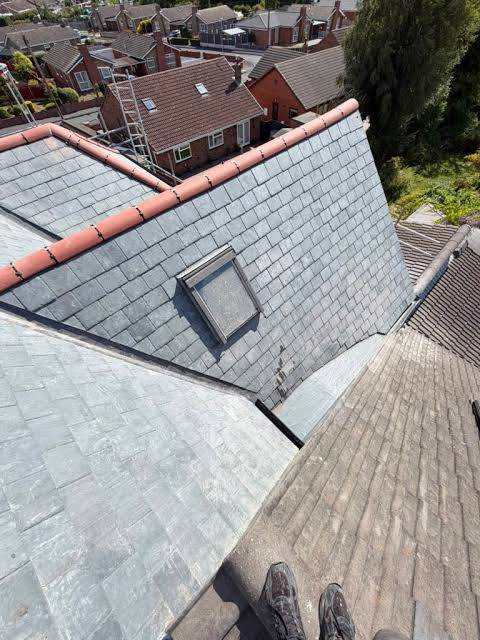
One slipped tile is a repair. A roof that keeps failing in different places is telling you the covering, the felt or the timbers underneath have reached the end of their life.
Gaps and broken tiles after every windy spell often mean the nails or battens holding them have rotted.
Brown rings on ceilings, peeling paint near chimney breasts or a musty smell in the bedrooms.
If you can see light through the roof from inside, water and draughts are getting in as well.
Dips between rafters or along the ridge point to wet, weakened timbers or an overloaded covering.
Thick moss holds moisture against the surface. Tiles that flake or turn soft are past saving.
When the same roof needs patching year after year, the money is better spent on a proper re-cover.
Not sure which you need? We inspect first and tell you straight. If a repair will do the job, we will say so, and you can read about roof repairs too.
The covering sets the look, the weight on your timbers and how long the roof lasts. We talk you through the options that suit your house, and show you samples before you decide.
Strong, good value and quick to lay. A wide range of profiles and colours, and the usual choice for 20th-century houses and extensions.
Best forSemi-detached and estate homes
Colour holds for decades and the finish is hard to match. Heavier than concrete, so we check the timbers can carry the load.
Best forPeriod homes and matching existing roofs
Slim, long-lasting and sharp-lined. Fixed with the right nails and headlap for your pitch and exposure.
Best forVictorian terraces and conservation areas
The slate look at lower weight and cost. A sensible choice where planning wants a slate appearance but the budget needs watching.
Best forSlate-look re-roofs on a budget
Extensions, garages and dormers need a different build-up, in EPDM, GRP or felt. See our flat roofing page.
Best forLow-pitch and flat areas
We strip back to sound timber, fit proper membrane and leave your drive swept. Here is the order the work follows.
We look at the roof, the loft and the access, then put the price, materials and programme in writing.
A scaffold goes up with a debris chute. Gardens, windows and drives are covered and protected.
Old tiles, felt and battens come off in sections. We check rafters, wall plates and any rotten timber before anything goes back.
Breathable membrane is laid and treated battens fixed at the gauge your covering needs, so the roof stays watertight each day.
Tiles or slate are laid and fixed, then ridge, hips, verges, valleys and lead flashings around chimneys and walls are finished.
Waste is taken away, the site is swept and we walk you round the finished roof before the scaffold comes down.
Your quote lists each of these, so you can compare it like for like with any other.
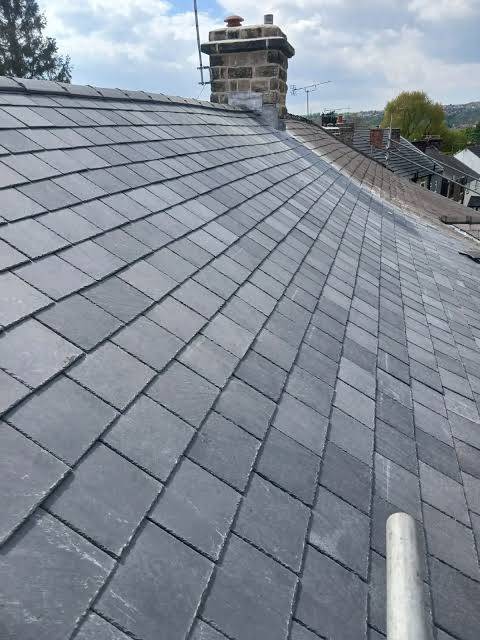
No two roofs are the same, so we quote after a visit, not over the phone. These are the things that move the price.
A well-fitted roof needs very little, but a little attention keeps it that way.
Can't see yours? Call and ask, and we'll talk it through.
A few isolated slipped tiles or a failed flashing can usually be repaired. A new roof is the better choice when tiles are crumbling across a whole slope, battens or felt have failed, there is widespread sagging, or repairs keep recurring. We inspect from outside and in the loft, then tell you which route makes sense.
Most house re-roofs take days rather than weeks, depending on roof size, the covering and the weather. We give you a programme with the written quote and keep the roof watertight at the end of each working day.
Like-for-like re-roofing usually does not need planning permission, but listed buildings and some conservation areas have extra rules. Building Regulations often apply when you re-cover more than 25% of a roof, mainly for insulation levels. We advise on both before work begins.
Yes, with care. We strip and re-cover in manageable sections, and lay the membrane before the roof is left, so it stays watertight. Work stops in high winds or heavy rain where it would be unsafe or damage the roof.
Yes. The scaffold has a waste chute, and old tiles, felt and battens are cleared from site. Disposal is itemised in your quote, and the drive and garden are swept at the end.
We show you the damage, explain what needs replacing and give you the price before we carry on. You are never charged for extra timber work without agreeing it first.
Tell us what you are seeing and we will arrange a visit and a written quote. Leak at night? Call us and we'll make it safe first, then quote the repair.
01225 800302